Leticia is the southernmost city in the Republic of Colombia, capital of the department of Amazonas, Colombia's southernmost town and one of the major ports on the Amazon river. It has an elevation of 96 meters above sea level and an average temperature of 27 °C (80.6 °F). Leticia has long been Colombia's shipping point for tropical fishes for the aquarium trade. Leticia has approximately 33,000 inhabitants on the left bank of the Amazon river, and is located at the point where Colombia, Brazil and Peru come together in an area called Tres Fronteras.
A long-standing border dispute involving Leticia, between Colombia and Peru, was decided in 1934 by the League of Nations after these two nations were engulfed in an armed conflict known as the Colombia-Peru War. This was the first instance of action by an international body using its powers covered by the Monroe Doctrine.
 |
| Amazon Jungle viewed from our Aeroplane |
 |
| Leticia Airport Colombia |
Cupuaçu, also spelled cupuassu, cupuazú, cupu assu, and copoasu, is a tropical rain forest tree related to cacao. Common throughout the Amazon basin, it is widely cultivated in the jungles of Colombia, Bolivia and Peru, with the largest production in Pará, followed by Amazonas, and Rondônia.
Cupuaçu trees usually range from 5 to 15 meters (16 to 50 feet) in height. They have brown bark and leaves are 25–35 cm (10–14 in) long and 6–10 cm (2–4 in) across, with 9 or 10 pairs of veins. As they mature, the leaves change from pink-tinted to green, and eventually they begin bearing fruit. Cupuaçu fruits are oblong, brown, and fuzzy, 20 cm (8 in) long, 1–2 kg (2–4 lb) in weight, and covered with a thick (4–7 mm), hard skin.
 |
| Cupuazú Fruits |
 |
| Fruit Market in Leticia Colombia |
 |
| Flooded River Amazon (10 Metres or 33 Feet above normal) |
 |
| Colombian Naval Vessel |
 |
| Hotel Decameron Deca Ticuna in Leticia |
 |
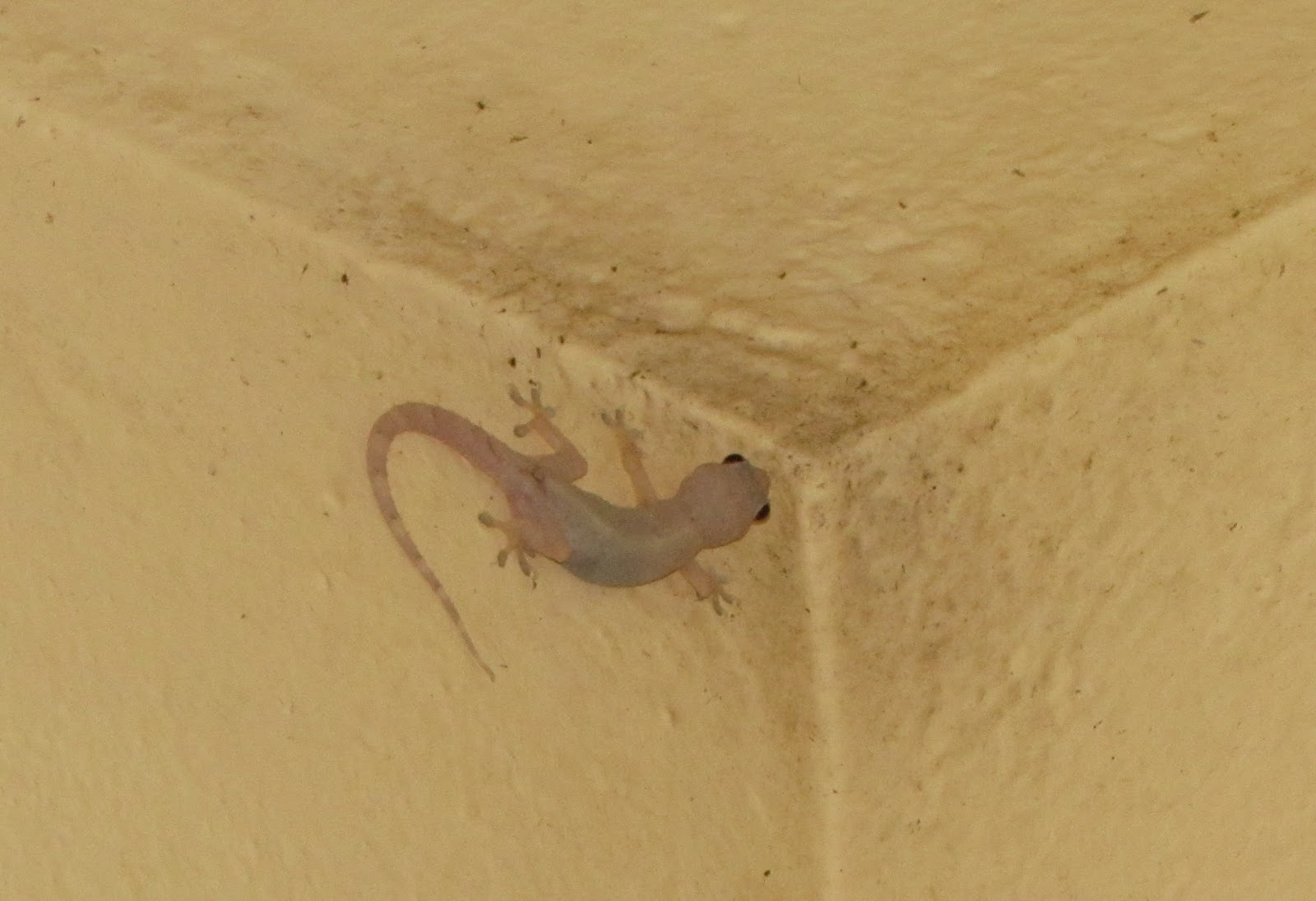
| Amazona Ghost Gecko |
 |
| Parroquia Nuestra Senora De La Paz. |
 |
| Typical Tourist Shop |
 |
| Giant Anaconda in the Hotel dinning area |
 |
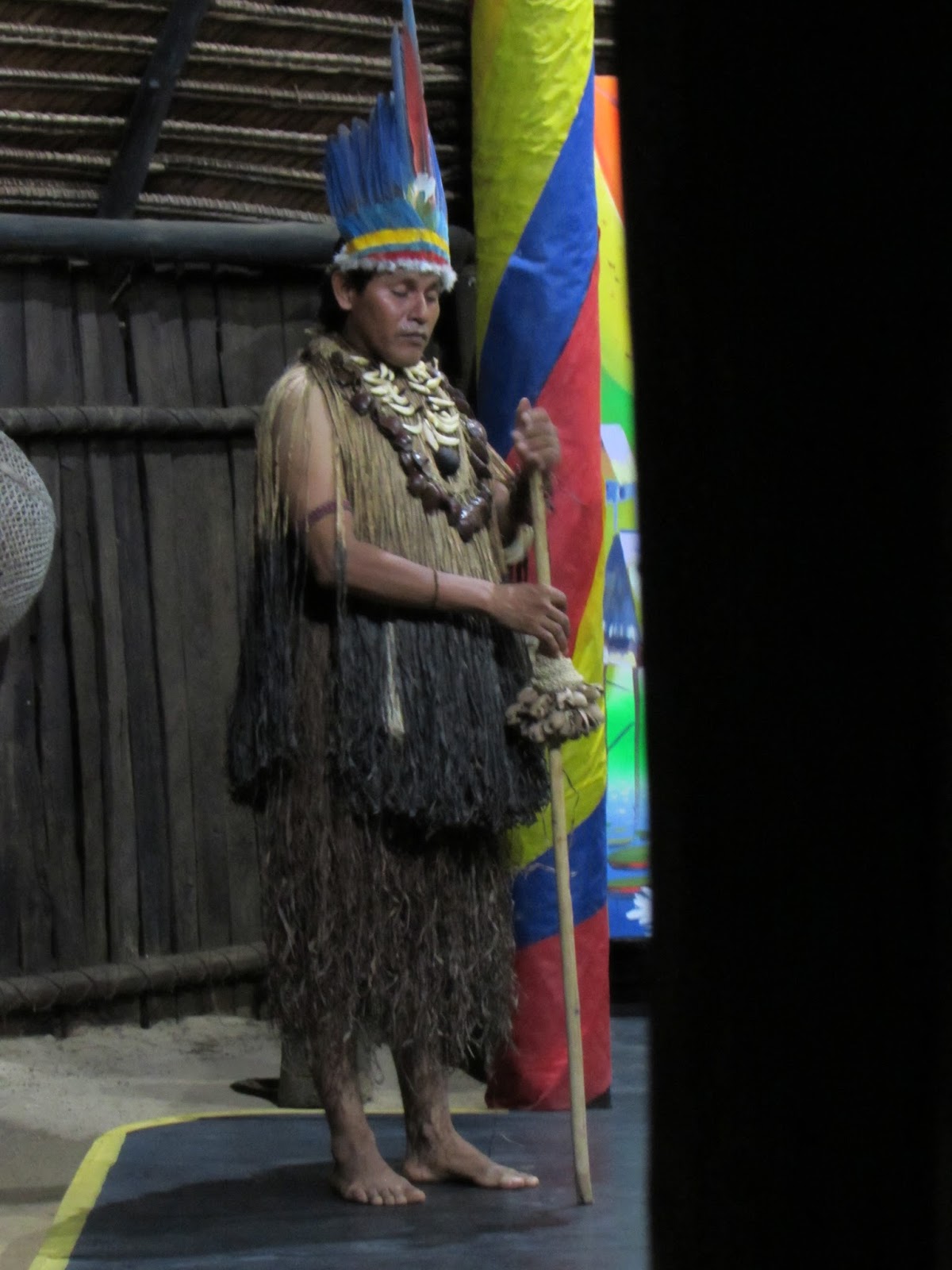
| Indian Shaman |
 |
| The Blue house is the last house in Colombia. Two Metres (Yards) to the right is the start of Brazil |
 |
| 'Victoria Amazonica' Giant Water Lilies |
 |
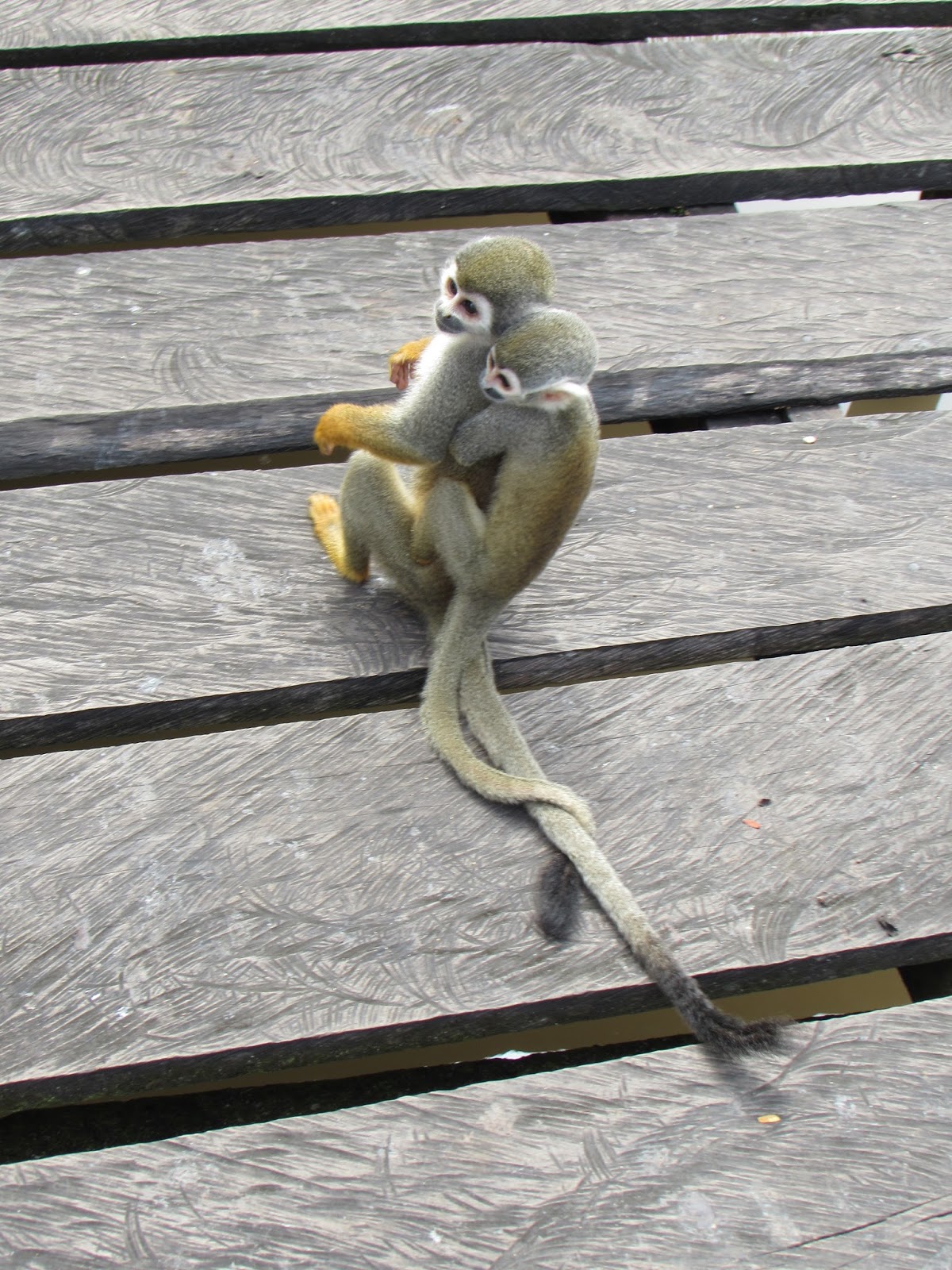
| Monkey Island |
 |
| Marpesia Berania Berania |
 |
| Grey River Dolphin |
 |
| Pink River Dolphin |
 |
| Large Billed tern |
 |
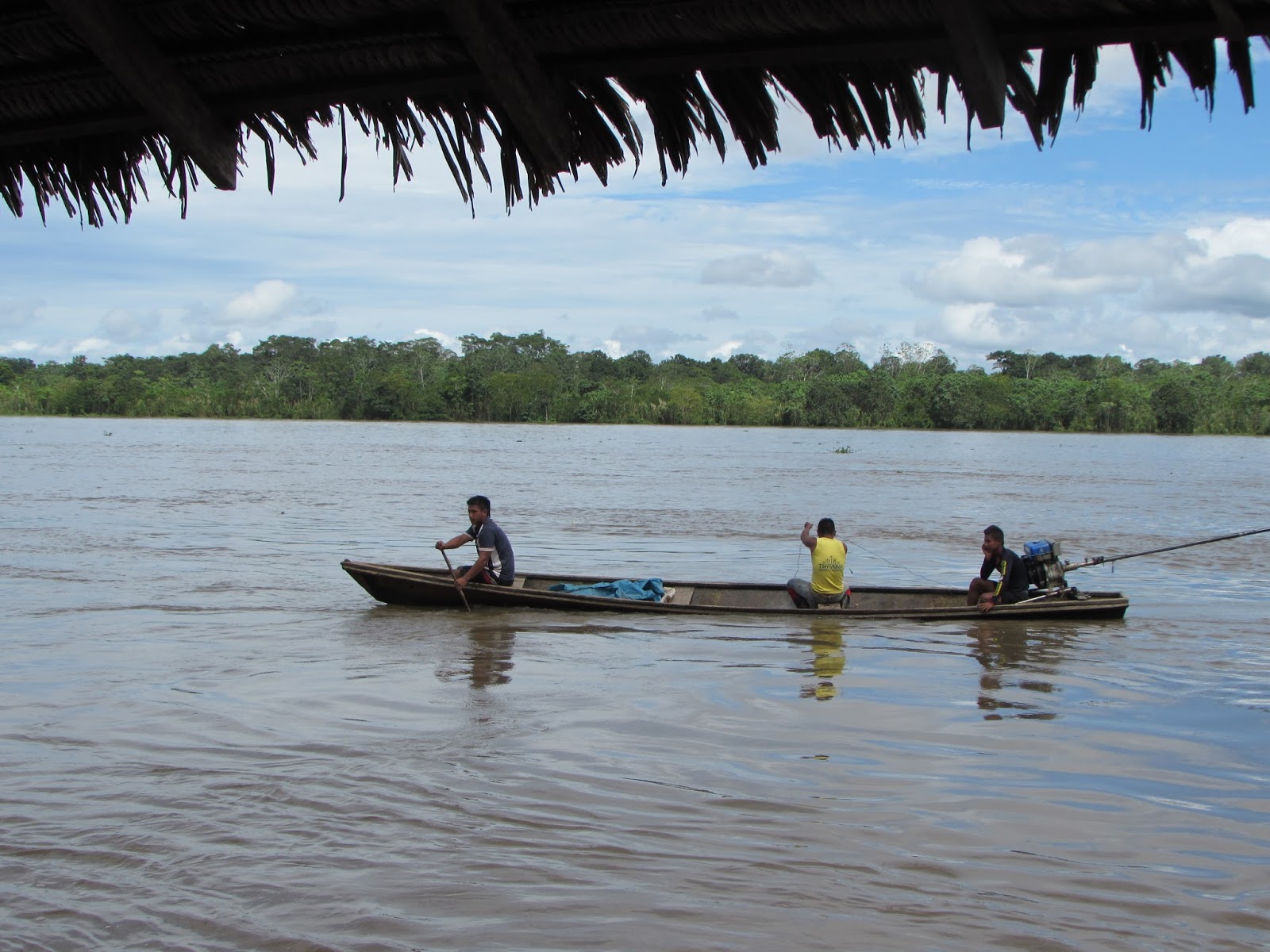
| Amazona Tribal Fishermen |
 |
| Siproeta Stelenes |
 |
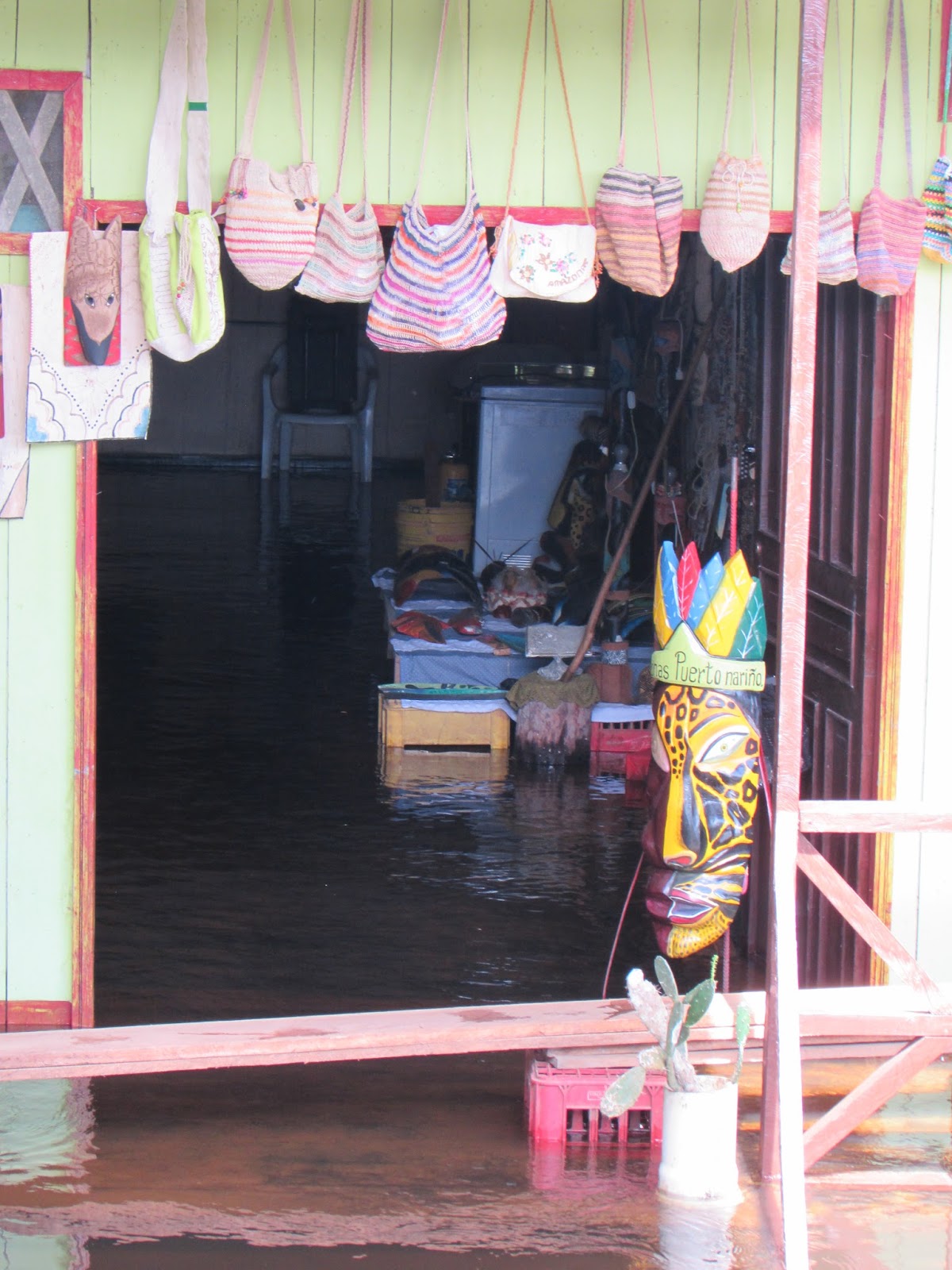
| Flooded Tribal Tourist Store |
 |
| Flooded Hotel in Puerto Narino |
 |
| Puerto Narino. An Eco-Town. No Cars or Motorcycles allowed |
 |
| During the Rainy season, these walkways are the only way to get around. |
 |
| Fresh captured fish in Puerto Narino |
 |
| Far left you can see one of the houses under water in Puerto Narino |
 |
| Look out tower in Puerto Narino |
 |
| Rainbow on the Amazon River |
 |
| Refugio Amazonas |
 |
| Local Taxi |
 |
| Brazilian Boarder - No Boarder Controls. Gateway to the town of Tabatinga |
 |
| Brazilians just love sandals - Must be 30 or more shops all in the same street |
 |
| Its not so easy to take your catch home when the Town is partially flooded. |
 |
| Not sure of the name of this snake, but the Brazilians said it was very poisonous. |
 |
| EVIDENCE - This cheeky Monkey stole my Rum and Coke |
 |
| Plane used to belong to Pablo Escobar. Was shot down in Brazil with over $6 Million on Board. Later the money went missing. |
 |
| Brazilian Fisherman |
 |
| Photo taken in Brazil. To the right the trees are in Colombia, and to the left in Peru |
 |
| Fresh cooked fish at a native Indian house deep in the jungle. |
 |
| The Indian Family. The were super and shared many stories with us |
.